2026 Best Boltless Rivet Rack for Warehouse Storage?
Warehouse storage decisions will become more demanding in 2026. E-commerce volatility, labor shortages, and tighter floor plans are changing how facilities use vertical space. The MHI 2024 Annual Industry Report identifies digital transformation, workforce pressure, and supply chain resilience as continuing industry priorities. A practical racking choice must support all three.
The Boltless Rivet Rack remains attractive for cartons, spare parts, archive boxes, and manually picked inventory. Its rivet-and-slot connection can simplify assembly and future reconfiguration. No special fastening tools are usually required. However, convenience should not replace engineering judgment. Rack height, shelf span, deck material, load distribution, aisle clearance, and floor condition directly affect performance. A shelf holding evenly placed cartons behaves differently from one carrying a concentrated machine part.
That difference matters.
Recent warehouse research from CBRE highlights continued pressure on logistics space and operating efficiency. In compact facilities, vertical storage may release valuable floor area, but only when workers can reach products safely and quickly. OSHA guidance also emphasizes stable storage, suitable loading practices, and clear aisles. Local building and seismic requirements may add further conditions.
The best 2026 model is not automatically the tallest or cheapest. It should match documented loads, picking frequency, available equipment, and expansion plans. Experienced installers should verify every bay after assembly. Regular inspections are still necessary. A small weakness may remain invisible until the rack is fully loaded.
This guide compares leading Boltless Rivet Rack options through capacity, adjustability, durability, safety features, and total ownership cost. Some conclusions will be conditional, because warehouse requirements are rarely identical. That uncertainty deserves attention.
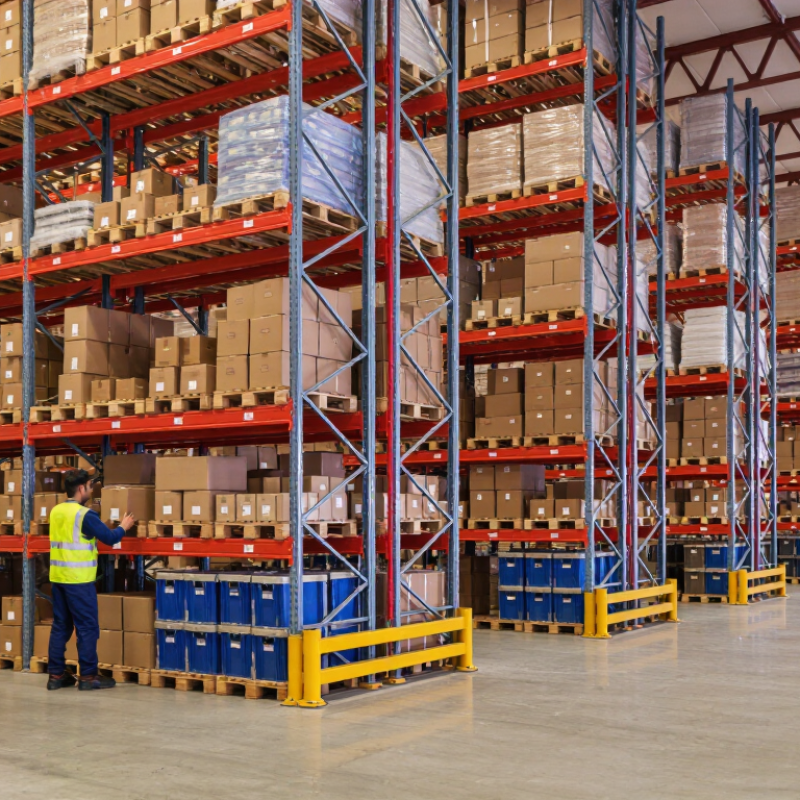
What Defines a Boltless Rivet Rack for Warehouse Storage?
A boltless rivet rack is defined by its connection system, not by a label. Upright posts and horizontal beams lock together with rivet-style tabs. No nuts or bolts slow the assembly. A rubber mallet is often enough. The frame should remain stable under rated loads. That distinction matters in busy warehouses. A loose fit is not a design feature.
For warehouse storage, useful design starts with capacity. Each level needs a visible load rating based on evenly distributed weight. Steel beams, bracing, and particleboard or steel decking must work as one system.
A shelf holding cartons is different from one holding dense machine parts. Depth should match the stored items, leaving little wasted space behind them. Clear aisle width also affects picking speed and handling safety. A rack can look strong and still be poorly planned.
During an assessment, I check upright alignment, beam engagement, floor condition, and damaged components. I also look for sharp edges and overloaded shelves. Small details matter. For humid areas, a suitable protective finish can reduce surface corrosion. Adjustable levels help when carton sizes change, but frequent changes need careful rechecking. One weakness is easy to overlook: boltless does not mean maintenance-free. Periodic inspections, readable labels, and balanced loading keep the system dependable. Real warehouses are rarely perfect. A practical rack should allow that reality without encouraging careless loading.
How to Evaluate Rack Capacity, Dimensions, and Material Quality
When evaluating a boltless rivet rack for warehouse storage, begin with capacity, not appearance. Record the weight of each carton, container, and tool placed on one shelf. Add a safety margin of at least 20 percent for uneven loading and future inventory changes. Shelf capacity should match the load per level, not only the rack’s total advertised capacity. Heavy items belong on lower levels. It reduces tipping risk and makes daily handling easier.
Measure the available space carefully. Check ceiling height, aisle width, doorway clearance, and sprinkler access before selecting dimensions. A rack that fits on paper may block forklifts or create unsafe blind corners. Adjustable beam levels are useful, but frequent adjustment can weaken careless assembly. Keep the shelves level. Small errors become visible when boxes begin leaning.
Material quality deserves close inspection. Look for thick, consistent steel, clean welds, firm rivet connections, and corrosion-resistant coatings. Shelves should resist bending under a measured load, not merely look strong when empty. Steel thickness alone can mislead because design shape also affects stiffness. Inspect the rack after installation, especially around joints and feet. I have found that rushed assembly causes more trouble than modest material differences. That assumption needs checking in every warehouse, because floor condition, humidity, and loading habits vary. Clear load labels and maintenance records also support safer, more reliable storage.
2026 Best Boltless Rivet Rack for Warehouse Storage? - How to Evaluate Rack Capacity, Dimensions, and Material Quality
| Evaluation Tier | Rack Configuration | Overall Dimensions
(W × D × H) | Number of Levels | Load per Shelf | Total Rated Load | Upright Material | Beam Material | Decking Type | Finish Quality | Best Warehouse Use |
| Excellent | Heavy-duty boltless rivet rack | 48 × 24 × 72 in
(1,219 × 610 × 1,829 mm) | 5 | 1,000 lb
(454 kg) | 5,000 lb
(2,268 kg) | 14-gauge steel
≈ 1.9 mm | 14-gauge steel
≈ 1.9 mm | Heavy-duty particleboard or wire deck | Powder-coated steel with full coverage | Bulk parts, tools, containers, and dense inventory |
| Very Good | Standard industrial rivet rack | 48 × 24 × 72 in
(1,219 × 610 × 1,829 mm) | 5 | 800 lb
(363 kg) | 4,000 lb
(1,814 kg) | 14-gauge steel
≈ 1.9 mm | 16-gauge steel
≈ 1.5 mm | Particleboard or laminated board | Powder-coated steel | General warehouse storage and order picking |
| Very Good | Wide-span boltless rack | 72 × 24 × 72 in
(1,829 × 610 × 1,829 mm) | 5 | 800 lb
(363 kg) | 4,000 lb
(1,814 kg) | 14-gauge steel
≈ 1.9 mm | 14-gauge steel
≈ 1.9 mm | Two-piece particleboard or wire deck | Impact-resistant powder coating | Long cartons, packaging materials, and oversized goods |
| Good | Medium-duty storage rack | 36 × 18 × 72 in
(914 × 457 × 1,829 mm) | 5 | 600 lb
(272 kg) | 3,000 lb
(1,361 kg) | 16-gauge steel
≈ 1.5 mm | 16-gauge steel
≈ 1.5 mm | Particleboard | Standard powder coating | Small parts, cartons, and light industrial supplies |
| Good | Compact boltless rack | 36 × 18 × 60 in
(914 × 457 × 1,524 mm) | 4 | 500 lb
(227 kg) | 2,000 lb
(907 kg) | 16-gauge steel
≈ 1.5 mm | 18-gauge steel
≈ 1.2 mm | Particleboard | Basic powder coating | Office inventory, maintenance supplies, and light storage |
| Light Duty | Small-footprint utility rack | 30 × 18 × 60 in
(762 × 457 × 1,524 mm) | 4 | 350 lb
(159 kg) | 1,400 lb
(635 kg) | 18-gauge steel
≈ 1.2 mm | 18-gauge steel
≈ 1.2 mm | Particleboard | Basic painted or powder-coated finish | Light cartons, records, and low-density inventory |
Evaluation notes: Load ratings are representative values for evenly distributed loads on properly assembled, level racks. Actual capacity depends on beam spacing, shelf span, decking condition, floor quality, installation, and manufacturer testing. Do not exceed the certified rating shown on the rack label or installation documentation.
How to Compare Assembly, Safety, Accessibility, and Maintenance Features
2026 Best Boltless Rivet Rack for Warehouse Storage?
How to Compare Assembly, Safety, Accessibility, and Maintenance Features
Choosing a boltless rivet rack begins with assembly, not appearance. In warehouse audits, I have seen teams lose hours correcting uneven frames. Select systems with clear instructions, numbered parts, and connectors that seat firmly without excessive force. A fast build is useful. It is not always a safe build. Check the stated load capacity for each shelf, not only the entire unit. Floors should be level, and heavy cartons should stay on lower shelves.
Tips: Test one rack before ordering many. Assemble it with the tools your staff normally uses. Confirm that shelves adjust without removing nearby inventory. Leave enough aisle space for safe hand access and equipment movement. Bright labels help workers find stock quickly, especially during busy shifts.
Accessibility affects daily productivity. Shelves should be reachable without unstable stools or awkward stretching. Smooth edges, visible load labels, and secure shelf decking reduce handling risks. Maintenance should remain simple. Inspect uprights, beams, shelf supports, and floor contact points on a scheduled basis. Watch for bent components, loose connections, rust, or overloaded shelves. Replace damaged parts promptly. I would also record inspection dates, although busy teams sometimes skip this step. That weakness deserves attention, because a small defect can become a costly interruption.
2026 Best Boltless Rivet Rack for Warehouse Storage?
Feature comparison for assembly, safety, accessibility, and maintenance. Higher scores indicate a more favorable warehouse-storage profile.
The scoring model uses practical warehouse criteria: tool-free assembly, frame stability, shelf access, adjustability, inspection effort, and replacement simplicity. Confirm the manufacturer’s stated load capacity, beam spacing, anchoring requirements, and applicable local safety standards before installation.
How to Select the Best Boltless Rivet Rack for Your 2026 Budget
2026 Best Boltless Rivet Rack for Warehouse Storage?
How to Select the Best Boltless Rivet Rack for Your 2026 Budget
Choosing a boltless rivet rack begins with your actual storage routine, not the lowest advertised price. Measure pallet widths, carton depths, aisle clearance, and ceiling height before comparing models. A rack that wastes 20 centimeters per shelf can quietly consume valuable floor space. Check each level’s rated capacity, then keep a sensible safety margin for uneven loading. In my warehouse experience, shelves often carry heavier items than planned. That assumption can become expensive.
Review the full budget, including decking, delivery, assembly time, and future adjustments. A lower-priced rack may need extra parts when carton sizes change. Inspect the frame thickness, rivet connections, bracing, and surface finish. For dusty or humid areas, corrosion resistance deserves more attention. Confirm that the rack can be anchored or stabilized when required by your facility’s safety procedures. Reliable documentation matters more than polished sales language.
Tips: Sketch one shelf with your largest carton before ordering. Mark the walking path with tape. Ask for load tables and installation guidance. Test one rack section first, then expand carefully. My first budget plan ignored relocation costs, and that mistake changed the final price. Leave room for imperfect forecasts. Storage needs rarely stay fixed.
