2026 Top Office Water Dispenser Types for Global Buyers
In 2026, global buyers will evaluate more than a machine’s cooling speed. An Office Water Dispenser must fit workplace habits, water quality, energy targets, and maintenance capacity. The category includes bottled coolers, bottleless point-of-use units, countertop models, under-sink systems, and hot-and-cold dispensers. Each type solves a different operational problem.
The evidence is practical. The WHO and UNICEF Joint Monitoring Programme reported that 2.2 billion people lacked safely managed drinking water in 2022. This finding makes filtration, sanitation, and supplier verification important purchasing issues. The World Health Organization also stresses risk management from source to point of consumption. A dispenser cannot correct every upstream water problem. That limitation deserves attention.
Energy use matters too. ENERGY STAR product guidance shows that efficient water coolers can reduce electricity consumption substantially compared with conventional models. Savings become visible beside a busy reception desk, where a unit may run continuously. Grand View Research and Fortune Business Insights both identify expanding demand for convenient, filtered drinking-water equipment worldwide. However, market forecasts differ because researchers define “water dispenser” differently. Buyers should therefore compare specifications, not headlines.
This guide examines the leading 2026 Office Water Dispenser types for international purchasing teams. It considers filtration stages, compressor performance, heating safety, noise, installation, replacement filters, and service access. It also weighs bottled-water logistics against bottleless convenience. Small details matter. A difficult filter change can quietly increase operating costs. A weak service network can turn a premium purchase into workplace frustration. The strongest choice is not always the most advanced model. It is the model that employees can use safely, maintain consistently, and trust every day.
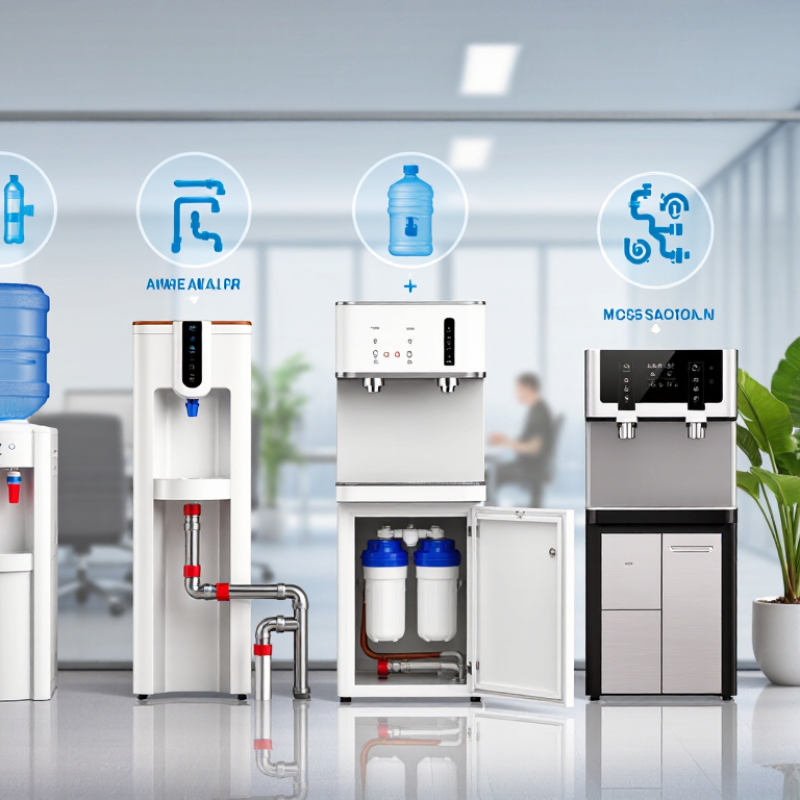
Office Water Dispenser Basics and Key Selection Criteria
Office water dispensers generally fall into three types:
point-of-use, bottled, and bottleless filtration units.
Point-of-use models connect to a building’s water line and usually provide chilled, ambient, or hot water.
Bottled units suit offices without suitable plumbing, but storage space and delivery planning matter.
Bottleless systems reduce lifting and waste, yet they require regular filter changes and sanitation.
Selection should begin with daily demand, not appearance.
A ten-person office may need less capacity than a busy reception area serving visitors.
Check flow rate, reservoir size, temperature settings, and recovery time during lunch breaks.
A unit that serves warm water after six cups is frustrating. It happens.
Measure the installation space, including ventilation clearance and door access. Noise level also deserves attention near meeting rooms.
Reliable purchasing requires more than comparing prices.
Review electrical consumption, leak protection, child safety controls, accessible controls, and cleaning procedures.
Ask for filter life, replacement costs, maintenance intervals, and service records.
Water quality varies by building, so confirm whether filtration targets sediment, chlorine taste, or specific contaminants.
Independent testing information and applicable safety certifications provide stronger evidence than promotional claims. I once focused too heavily on cooling speed and overlooked maintenance access. That mistake made routine cleaning slower than expected.
Train staff to report unusual taste, temperature changes, or leaks immediately.
Main Types of Office Water Dispensers in 2026
Main Types of Office Water Dispensers in 2026
Office water dispensers now fall into four practical categories: bottled, point-of-use, countertop, and under-sink systems. Bottled dispensers remain flexible for temporary offices or buildings without reliable plumbing. They require storage space and scheduled deliveries. Point-of-use units connect directly to mains water, usually adding filtration, cooling, heating, or carbonation. They fit permanent workplaces with stable water infrastructure.
Countertop dispensers suit meeting rooms, small offices, and reception areas. Their smaller footprint is useful, but output can be limited during busy periods.
Under-sink systems hide filtration equipment below the cabinet and use a separate dispensing tap. They create a cleaner workspace, though installation and maintenance need qualified technicians.
Market evidence supports this shift toward connected systems. Grand View Research reported continued growth in the global water dispenser market, supported by office demand for filtered drinking water and reduced plastic handling. Fortune Business Insights also identifies point-of-use systems as a major growth segment through the forecast period. Energy performance matters too. ENERGY STAR guidance shows that certified commercial water coolers can reduce electricity use compared with standard models.
Selection still needs local testing. A high-capacity unit may waste energy in a small office. Filtration claims can also sound stronger than real laboratory results. Buyers should check flow rate, filter certification, noise, sanitation access, and replacement costs. Small details matter.
Water Sources, Filtration Systems, and Heating Methods
2026 Top Office Water Dispenser Types for Global Buyers
Water source determines installation effort, hygiene control, and long-term operating cost. Plumbed-in dispensers connect directly to treated mains water, while bottled models suit offices without reliable plumbing. Refill-based units reduce container handling, but their source quality still needs verification. The WHO and UNICEF Joint Monitoring Programme reported in 2023 that 2.2 billion people lacked safely managed drinking water in 2022. Office buyers should therefore test incoming water, not assume it is safe.
Filtration should match the local problem. Sediment filters capture visible particles. Activated carbon improves taste and reduces chlorine. Reverse osmosis can lower dissolved salts, but it creates wastewater and removes useful minerals. Ultraviolet treatment targets microorganisms, yet it does not remove dirt. NSF/ANSI 42, 53, and 58 provide useful performance references for different filter claims. Certification helps, though paperwork cannot replace scheduled cartridge changes.
Heating design also affects energy use and user experience. Storage-tank heaters deliver stable hot water during busy periods, but they keep reheating between uses. Instant-heating systems reduce standby losses and often suit smaller offices. Temperature recovery may feel slower during meeting-room peaks. The International Energy Agency’s Energy Efficiency 2023 report stresses the importance of reducing standby consumption in appliances and buildings. A practical mistake is choosing maximum heating speed first. Actual demand, maintenance access, local water chemistry, and electrical limits deserve equal attention. No specification sheet tells the whole story.
Features, Costs, Maintenance, and Workplace Suitability
Office water dispensers now fall into three practical groups: bottleless, bottled, and countertop units. Bottleless models connect to a mains supply and usually include sediment and carbon filters. Some add chilled, heated, or sparkling water. Bottled dispensers suit offices without plumbing access, but storage space becomes a daily concern. Countertop units work well in small teams with limited floor area.
Features affect both purchase price and running cost. A basic countertop dispenser may cost 150–400 USD, while filtered bottleless systems often range from 500–1,800 USD before installation. Installation can require drainage, electrical checks, and water-quality testing. Energy use also matters. A busy office may prefer timed heating and sleep modes to reduce idle consumption. Sparkling functions are attractive, but cylinders need regular replacement. Small costs accumulate.
Maintenance is less visible, yet it decides workplace suitability. Filters commonly need replacement every three to twelve months, depending on usage and water quality. Drip trays should be cleaned weekly. Touch points need daily wiping in shared kitchens. In one office assessment, the first maintenance estimate was too optimistic because staff ignored filter alerts. That mistake matters. Select a unit with clear indicators, accessible parts, and a service plan with documented response times. A high-capacity dispenser may suit a 100-person office, while a quiet countertop model may be better for a ten-person room. Noise, queue time, cup storage, and floor drainage deserve attention before purchase.
2026 Top Office Water Dispenser Types for Global Buyers
Typical cost and maintenance comparison for common office water dispenser formats. Figures are indicative global market ranges in USD and may vary by capacity, installation requirements, local labor, water quality, and service contracts.
Bottleless point-of-use systems are generally suited to medium and large workplaces because they reduce bottle handling and recurring deliveries. Bottled top-load units usually have the lowest initial cost and work well for small offices, but require regular bottle replacement and storage. Typical cleaning or sanitizing is recommended every 3–6 months, while filters commonly require replacement every 6–12 months, depending on usage and water quality.