Skip to content

10 Best PCB Design Companies for Global Buyers

Global electronics depend on reliable, manufacturable, and carefully tested pcb design. Yet choosing a capable partner is rarely simple. A polished website cannot reveal weak impedance control, poor documentation, or costly production surprises.

Market evidence shows why this decision matters. Grand View Research valued the global printed circuit board market at approximately USD 82.96 billion in 2023. It projects continued growth through 2030, driven by automotive electronics, telecommunications, medical devices, and advanced computing. The IPC International Technology Roadmap for 2024 also highlights rising demands for high-speed signaling, miniaturization, thermal management, and supply-chain resilience. These pressures affect every board, from a compact wearable module to a dense automotive controller.

Lee Ritchey, a respected signal-integrity and pcb design authority, has repeatedly emphasized a practical principle: “The best design is the one that meets its requirements with the fewest compromises.” That principle guides this selection of ten PCB design companies for global buyers. The evaluation considers engineering experience, DFM and DFA practices, multilayer capability, compliance awareness, prototyping speed, testing depth, and communication quality. Certification alone is not enough. Neither is a low quotation.

Some firms excel at rapid prototypes. Others handle complex HDI boards, rigid-flex assemblies, or regulated medical hardware. No ranking is perfect. Project fit can change everything. Buyers should still verify references, inspection records, revision control, and production capacity before signing a contract. A dependable partner should make technical risks visible, not merely make promises sound attractive.
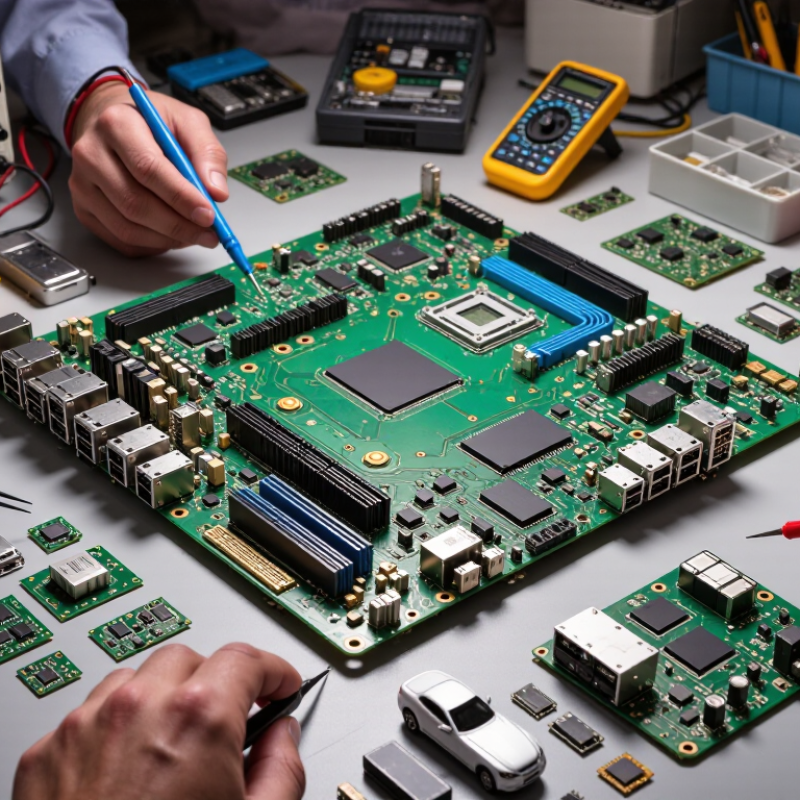
10 Best PCB Design Companies for Global Buyers

What PCB Design Companies Do and Why Global Buyers Need Them

PCB design companies turn electrical ideas into manufacturable board files. They create schematics, place components, route traces, and define layer stacks. Their work also includes power integrity, signal integrity, thermal planning, and design-for-manufacturing checks. A useful partner asks how the board will be assembled, tested, repaired, and upgraded.

Global buyers face complications beyond circuit performance. A design that works in simulation may fail during assembly because a footprint is unavailable. A supplier may also use different drilling limits, copper weights, or inspection methods. Experienced design teams compare these constraints before releasing Gerber files, drill data, pick-and-place files, and a controlled bill of materials. They can flag tolerance risks, suggest substitute parts, and prepare clear revision records for remote teams. Small details matter. One mislabeled connector can delay a production run.

Reliable cooperation requires evidence, not attractive promises. Buyers should review sample documentation, engineering qualifications, verification methods, and communication practices. Ask for impedance calculations, design review notes, test reports, and realistic delivery assumptions. Secure file handling and change approval are equally important across borders. Still, no design partner is perfect. Requirements may change late, and an approved component may become unavailable. A careful team admits uncertainty, records decisions, and tests critical assumptions with prototypes. That honesty often protects a global project better than confident wording.

Key Criteria for Evaluating PCB Design Companies Worldwide

Choosing a PCB design company requires more than comparing hourly rates. Global buyers should inspect engineering depth, documentation quality, and production awareness. Ask whether engineers can explain layer stackups, controlled impedance, thermal paths, and component derating clearly. Request anonymized design samples, schematic reviews, and documented design-for-manufacturing checks. Strong providers identify risks before Gerber release. That matters.

Reliability depends on repeatable processes. Check revision control, design-change approval, library management, and test records. Recognized quality certifications can support confidence, but certificates alone prove little. Ask how the team handles obsolete components, tolerance changes, and last-minute substitutions. A practical trial project can reveal response speed, question quality, and ownership. Watch the details. Can the team deliver a clean bill of materials, fabrication notes, and assembly drawings without repeated reminders?

For international projects, evaluate communication across time zones, technical English, data security, and shipping documentation. Confirm whether files remain traceable from revision A through production release. Clarify quoted scope, review rounds, turnaround times, and responsibility for errors. Site audits or live design reviews add useful evidence. Still, no evaluation is perfect. A polished presentation may hide weak peer review or limited high-speed experience. Test claims against measurable records, not promises.

10 Leading PCB Design Companies for International Projects

International PCB projects demand more than attractive layouts and fast quotations. The right design company should understand regional standards, documentation practices, and production constraints. Experienced teams review schematics, component availability, signal integrity, thermal behavior, and assembly access before releasing files.

Leading PCB design companies for international projects usually provide clear design histories and practical engineering evidence. They can deliver stack-up plans, controlled-impedance calculations, 3D checks, manufacturing drawings, and verified Gerber data. Strong communication also matters. A project manager should explain risks in plain English and respond across time zones without hiding delays.

No design partner is flawless. That matters. Even skilled engineers may overlook a substitute component or underestimate customs-related timing. Buyers should request sample reports, revision records, and references from comparable projects. Independent design reviews can expose weak grounding, crowded routing, or unclear test points before production begins. Reliable companies welcome those questions. They also protect technical files, document every change, and support testing after prototype assembly. This combination of engineering discipline and honest communication helps international buyers make safer decisions when selecting among the ten leading PCB design companies.

10 Best PCB Design Companies for Global Buyers - 10 Leading PCB Design Companies for International Projects

No. Evaluation Dimension Recommended International Benchmark Relevant Standard or Deliverable Value for Global Buyers
01 International Design File Support Native handling of Gerber, ODB++, IPC-2581, drill and pick-and-place files Gerber X2, ODB++ and IPC-2581 manufacturing data formats Improves communication between designers, fabricators and assemblers in different countries
02 Design-for-Manufacturing Review Pre-production checks for spacing, annular rings, drill sizes, solder mask and fabrication limits DFM report with issue classification and corrective recommendations Reduces avoidable manufacturing delays, rework and quotation changes
03 High-Speed Signal Integrity Controlled-impedance routing, differential-pair rules, return-path planning and stack-up analysis Impedance targets, layer stack-up, length-matching and signal-integrity documentation Supports reliable performance for USB, PCIe, Ethernet and other high-speed interfaces
04 Multilayer and HDI Capability Experience with multilayer, microvia, blind-via and sequential-build designs HDI stack-up proposal, via structure and fabrication feasibility review Enables compact products with higher routing density and smaller form factors
05 IPC-Based Design Practice Design rules aligned with applicable IPC guidance for board geometry, materials and acceptability IPC-2221, IPC-7351, IPC-A-600 and IPC-6012 references where applicable Creates a common technical language for international engineering and manufacturing teams
06 Regulatory and Material Documentation Clear material, finish, traceability and compliance documentation for the destination market RoHS and REACH declarations, material datasheets and certificate records Helps buyers manage customs, environmental compliance and product qualification
07 Electrical and Thermal Validation Power-integrity review, current-capacity assessment, thermal analysis and grounding strategy Voltage-drop, thermal-risk and power-distribution review results Improves product reliability in industrial, automotive and high-load applications
08 Revision and Engineering Change Control Controlled schematic, layout, bill-of-materials and fabrication-output revisions Revision history, change notes, approval records and release packages Prevents outdated files from entering cross-border production workflows
09 Prototype-to-Production Readiness Design review process that covers prototype build, assembly feedback and production scaling Prototype build package, assembly notes, test points and production handoff checklist Lowers transition risk when moving from engineering samples to volume production
10 Secure International Collaboration Documented access control, secure file exchange, confidentiality procedures and technical English support NDA process, controlled-access workspace and formal communication records Protects intellectual property and improves coordination across time zones and regions

The criteria above are standards-based evaluation factors for comparing anonymous PCB design providers on international projects; they do not represent a ranking of named companies.

Comparing Services, Capabilities, Industries, and Global Support

Choosing among the 10 best PCB design companies requires more than comparing hourly rates. Global buyers should examine engineering experience, prototype quality, production capacity, and communication practices. A capable partner can support schematic capture, multilayer layouts, signal integrity, thermal planning, and design-for-manufacturing reviews. Ask for evidence from similar industries, such as medical devices, automotive controls, industrial sensors, or consumer electronics. Practical experience matters.

Global support can determine whether a project stays on schedule. Confirm time-zone coverage, response times, language support, and engineering ownership. Reliable companies provide controlled revision records, clear design files, inspection reports, and traceable component decisions. They should also explain testing methods, material options, certification support, and supply-chain risks. A low quote may exclude important engineering work. That detail is easy to miss.

Tips: Request a sample project timeline before signing. Compare how each company handles a late component, failed test, or urgent layout change. Ask who approves revisions and who communicates with your factory. Review security procedures for shared files. Do not rely only on polished case studies. Some impressive portfolios reveal little about daily support. I would also test communication with a small paid design task, because promises can sound stronger than execution. Leave room for technical questions; silence during early discussions may become expensive later.

Global PCB Design Supplier Evaluation Priorities

This benchmark highlights the practical factors global buyers commonly review when selecting a PCB design partner. Engineering quality, delivery reliability, compliance, communication, and cost should be assessed together because performance in one area cannot fully compensate for weaknesses in another.

How to Select the Right PCB Design Partner for Your Project

Selecting the right PCB design partner requires more than comparing hourly rates. IPC market data placed global PCB sales near US$90 billion in 2023, showing the scale and pressure of this industry. Your partner should understand stackup planning, controlled impedance, thermal management, and design for manufacturing. Ask for documented examples with similar layer counts and material requirements.

Experience should appear in the workflow. Look for formal reviews, revision control, component lifecycle checks, and traceable engineering decisions. A 2024 global smart-manufacturing survey reported that 86% of executives viewed digital manufacturing as a major competitiveness factor. That finding matters. A capable design team should use secure collaboration tools and structured data, not scattered email attachments. Confirm how they protect files and manage access. Request compliance with relevant IPC design standards. Standards alone do not guarantee quality.

Tips: Ask for a sample design review. Request the partner’s defect rate, turnaround range, and escalation process. Test communication with one small task before signing a larger contract. A low quote can still become expensive after repeated prototypes. I would not trust impressive visuals without measurable evidence. Documentation matters. Also question optimistic delivery dates; complex boards often change after testing, and even experienced teams can underestimate redesign time.