Skip to content

China Top 10 Electromagnetic Device Manufacturers?

China has become a major production base for electromagnetic components used in automation, energy systems, transportation, and industrial equipment. This article introduces ten notable Chinese manufacturers serving these demanding fields. The focus is practical.

The term Electromagnetic Device covers products such as solenoids, relays, contactors, magnetic sensors, lifting magnets, and customized actuators. Each manufacturer is assessed through product range, engineering capability, manufacturing experience, quality control, and application support. Public certifications, testing practices, export experience, and customer feedback also deserve attention. A polished website alone proves little.

Some companies specialize in compact switching components. Others build heavy-duty magnetic systems for cranes, machine tools, or power distribution cabinets. Factory scale can matter, but it does not guarantee consistent performance. Design drawings, material selection, coil temperature control, insulation strength, and response time often reveal more. Small details matter.

The selection should help engineers, procurement teams, and international buyers compare suppliers more responsibly. It will consider customization, minimum order requirements, technical communication, delivery reliability, and after-sales support. These factors can influence total project cost more than the initial quotation. However, rankings remain partly subjective. Market information changes, and supplier capabilities may vary between product lines. Buyers should verify current certificates, test reports, production capacity, and references before placing an order. A sample test is wiser than a confident assumption. This overview aims to offer a clear starting point, not an unquestionable verdict.
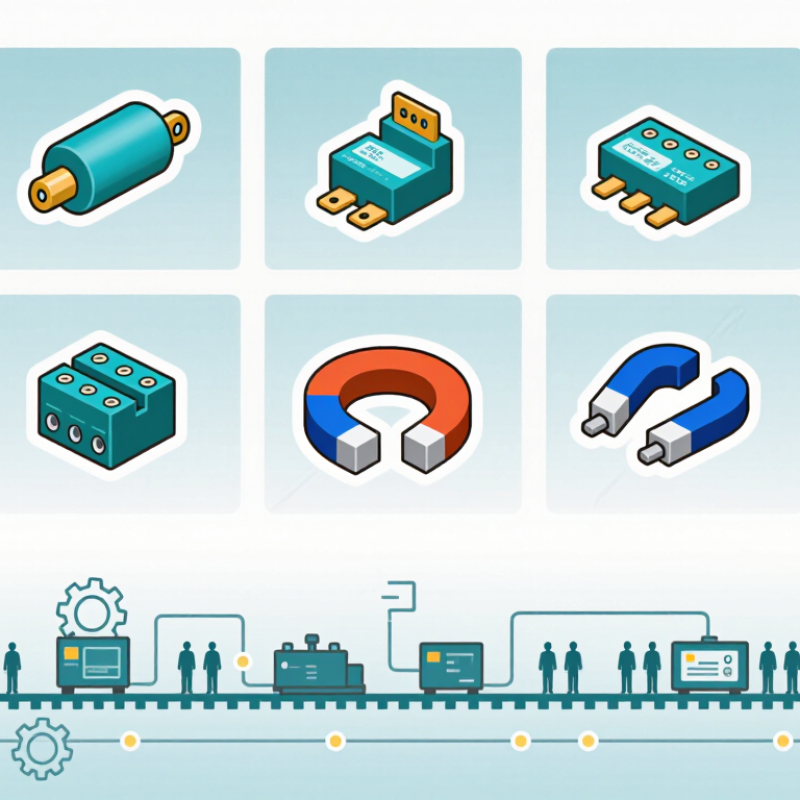
China Top 10 Electromagnetic Device Manufacturers?

Definition and Types of Electromagnetic Devices

Electromagnetic devices convert electrical energy into magnetic force, motion, sensing, or controlled switching. Their operation depends on current, magnetic fields, coils, cores, and sometimes permanent magnets. In practical engineering, the term covers both power equipment and small control components. A relay, for example, uses a coil to move contacts. An electromagnetic actuator pushes or pulls a mechanical part. Solenoids are common in valves, locks, and industrial fixtures. Transformers transfer alternating-current energy between circuits through magnetic coupling. They do not create energy. They change voltage, current, or electrical isolation.

Another major type is the electromagnetic sensor. It detects speed, position, proximity, or metal movement without direct contact. Motors and generators also belong to this family, although their functions differ. Motors produce rotation from electrical input. Generators produce electrical output from mechanical input. Electromagnetic interference filters and chokes control unwanted noise in cables. These categories can overlap. That is where product comparisons become difficult. A device may be both a sensor and a switching component. Specifications, operating temperature, insulation strength, response time, and duty cycle deserve careful review. I have seen promising designs fail because heat buildup was treated as a minor detail.

Tips: Match the device type to the load, voltage, frequency, and movement required. Check coil heating during repeated operation. Confirm contact ratings and magnetic holding force. Ask for test data, drawings, and traceable quality records. A low-cost component may look suitable, yet its lifespan can change sharply under dust, vibration, or frequent switching. Leave a safety margin. It is not always obvious.

Criteria for Ranking Chinese Manufacturers

China Top 10 Electromagnetic Device Manufacturers?

Ranking Chinese electromagnetic device manufacturers requires more than comparing sales figures. Product safety should receive the highest weight. Auditors should verify ISO 9001 systems, relevant IEC test results, insulation performance, thermal endurance, and electromagnetic compatibility records.

The International Federation of Robotics reported that China installed 276,288 industrial robots in 2023, representing 51% of global installations. This scale increases demand for stable sensors, coils, filters, relays, and control components.

A practical ranking should also measure field reliability. Reviewers can examine failure rates, warranty claims, batch traceability, and mean time between failures.

Laboratory data must match performance on factory floors, including dust, vibration, voltage fluctuation, and heat. Delivery capacity matters too. Evaluate average lead times, production redundancy, export documentation, and technical response speed.

Market reports from MarketsandMarkets identify continuing growth in electromagnetic compatibility equipment, driven by automation, electric vehicles, and connected machinery. However, market growth alone cannot prove engineering quality.

Tips: Use weighted scoring, not advertising claims. Give reliability and certification more points than low prices. Request sample testing. Ask for three years of complaint data when available. A ranking can still contain uncertainty, especially when manufacturers disclose limited failure statistics. That weakness should be stated openly.

The strongest assessment combines factory visits, independent testing, customer interviews, and verified documents. Fancy brochures are not evidence.

China’s Top 10 Electromagnetic Device Manufacturers

China’s Top 10 Electromagnetic Device Manufacturers

China’s top 10 electromagnetic device manufacturers serve automation, energy, transport, medical equipment, and industrial control markets. Their products may include solenoids, electromagnetic relays, coils, actuators, sensors, and magnetic assemblies. A reliable ranking should examine engineering depth, production consistency, testing capability, and service response. Factory scale alone is not enough.

In practical supplier reviews, I look for documented material grades, coil temperature tests, insulation results, and repeatable pull-force data. Good manufacturers maintain traceable batches and calibrated inspection equipment. They also explain design limits before accepting an order. This matters when a device operates inside a hot cabinet, beside vibration, or under frequent switching. Small details matter.

The strongest candidates among China’s top 10 usually offer prototype support, tooling control, and stable quality during volume production. They may provide samples, drawings, test reports, and controlled change notices. However, public rankings can be incomplete. Some capable factories disclose little information, while larger suppliers may appear stronger than their actual technical performance. That is worth questioning. Buyers should compare failure data, delivery records, warranty handling, and compliance documents directly. An on-site audit or independent laboratory test can reveal issues that polished brochures hide. The best choice depends on operating voltage, duty cycle, load, environment, and required service life, not popularity alone.

Core Products and Industrial Applications

China’s top ten electromagnetic device manufacturers typically produce relays, contactors, solenoid valves, inductors, transformers, and magnetic sensors. These core products control current, switch circuits, store energy, or convert voltage. Electromagnetic relays support protection systems and industrial control cabinets. Contactors manage motors, pumps, compressors, and heating equipment. Coils and inductors reduce electrical noise in power supplies and automation equipment. These are practical essentials.

In factory automation, electromagnetic devices operate conveyor systems, robotic stations, packaging machines, and safety interlocks. Power distribution projects use transformers, circuit protection components, and switching devices for stable energy delivery. Rail equipment needs compact relays and contactors that tolerate vibration, temperature changes, and frequent switching. Medical and laboratory equipment also depends on precise solenoid control. Application fit matters.

Technical evaluation should include insulation strength, contact resistance, thermal performance, switching life, and response time. A dependable manufacturer normally provides test records, material certificates, process controls, and traceable inspection data. Production audits can reveal more than polished brochures. Yet no supplier is perfect. Some specifications remain unclear until samples face real loads. Engineers should test noise, heat buildup, and endurance under working conditions. That extra step may expose a small design weakness before it becomes an expensive field failure.

China Top 10 Electromagnetic Device Manufacturers? - Core Products and Industrial Applications

No. Manufacturer Profile Core Electromagnetic Products Typical Technical Range Primary Industrial Applications Common Standards Typical Production Capability
01 Profile A — Power Transformer Specialist Oil-immersed power transformers, distribution transformers, and auxiliary transformers Approx. 10 kVA to 1,000 MVA; low-, medium-, and high-voltage designs Utility grids, substations, renewable-energy plants, industrial power systems IEC 60076; GB/T 1094; IEEE C57 series Custom design, routine testing, temperature-rise and insulation testing
02 Profile B — Dry-Type Transformer Specialist Cast-resin and air-insulated dry-type transformers Approx. 50 kVA to 20 MVA; commonly 6–35 kV primary voltage Buildings, data centers, hospitals, rail transit, mining and marine facilities IEC 60076-11; GB/T 10228; IEC 60529 for enclosures Low-fire-risk construction, noise control and indoor installation options
03 Profile C — Reactor and Harmonic-Control Specialist Line reactors, load reactors, detuned reactors, and harmonic filters Approx. 1 kVAR to several MVAR; 50/60 Hz systems Variable-frequency drives, motor control centers, capacitor banks, solar inverters IEC 60076-6; IEEE 519; GB/T 1094.6 Air-core or iron-core configurations with thermal protection options
04 Profile D — High-Frequency Magnetic Component Specialist High-frequency transformers, ferrite inductors, common-mode chokes, and EMI filters Approx. 10 kHz to 1 MHz; milliwatt to multi-kilowatt power levels Switch-mode power supplies, EV chargers, telecommunications, LED drivers IEC 61558; IEC 60938; CISPR 11/32 for EMC performance Automated winding, ferrite-core assembly and inductance testing
05 Profile E — Industrial Solenoid Specialist Pull solenoids, push solenoids, proportional solenoids, and solenoid valves Approx. 12–240 V AC/DC; force commonly from a few newtons to several hundred newtons Fluid control, packaging machinery, vending equipment, locks, and automation systems IEC 60204-1; ISO 4414; ISO 4413; relevant valve safety requirements High-cycle operation, custom stroke lengths and IP-rated housings
06 Profile F — Electromagnetic Contactor and Relay Specialist AC contactors, DC contactors, overload relays, control relays, and auxiliary contacts Control coils commonly 12–690 V; switching ratings from control circuits to hundreds of amperes Motor starters, HVAC systems, industrial automation, battery storage and charging systems IEC 60947-4-1; IEC 60947-5-1; GB/T 14048 Mechanical and electrical endurance testing with modular accessories
07 Profile G — Lifting Magnet Specialist Electro lifting magnets, battery-powered lifting magnets, and magnetic spreader systems Typical rated lifting capacity from 0.5 to more than 30 tonnes, depending on load geometry Steel mills, shipyards, scrap yards, warehouses and metal fabrication plants EN 13155; ASME B30.20; applicable lifting-equipment regulations Load-specific magnetic design, safety-factor verification and control panels
08 Profile H — Magnetic Separation Specialist Overband magnets, magnetic pulleys, drum separators, grate magnets, and eddy-current separators Permanent or electromagnetic systems; separation particle sizes commonly from sub-millimeter to large ferrous pieces Mining, recycling, food processing, plastics, ceramics and bulk-material handling IEC 60204-1; ISO 12100; machinery guarding and food-contact requirements where applicable Continuous-duty designs with custom belt widths and magnetic field strength
09 Profile I — Magnetic Encoder and Sensor Specialist Hall-effect sensors, magnetic encoders, proximity sensors, and current sensors Operating supplies commonly 5–36 V DC; current measurement from milliamperes to hundreds of amperes Robotics, servo drives, electric vehicles, industrial motors and condition monitoring IEC 61000 series; ISO 26262 for applicable automotive safety programs Surface-mount or custom assemblies with calibration and environmental testing
10 Profile J — Electromagnetic Brake and Clutch Specialist Spring-applied brakes, electromagnetic clutches, tooth clutches, and torque limiters Torque ratings commonly from below 1 N·m to several thousand N·m Cranes, elevators, machine tools, conveyors, packaging and automated production lines IEC 60034; ISO 13849-1 for applicable safety-related control systems Rapid response, controlled braking, wear compensation and fail-safe options

How to Select a Suitable Chinese Manufacturer

China Top 10 Electromagnetic Device Manufacturers?

Selecting a suitable Chinese manufacturer requires more than comparing prices. The IEA’s Energy Efficiency 2023 report estimates that electric motor systems consume roughly 40% of global electricity. Small efficiency losses can therefore create significant operating costs. Ask each supplier for measured efficiency, temperature-rise results, insulation class, and test conditions. Do not accept only catalogue figures.

Review production evidence before signing a contract. Check ISO 9001 procedures, incoming-material records, winding controls, and final inspection reports. For motors and related equipment, confirm alignment with applicable IEC 60034 requirements. For export projects, verify RoHS, electromagnetic compatibility, and destination-market documentation. Request samples from the same production line used for mass orders. A polished sample can mislead.

Tips: Compare at least three factories using one technical specification sheet. Audit copper grade, magnetic steel thickness, bearing sources, and coil varnish processes. Ask how rejected units are traced and corrected. The IEA also links efficient motor systems with major industrial energy savings, so calculate lifetime cost, not purchase price alone. Factory visits are useful, but they are not proof of consistent output. No checklist is perfect. I would also allow time for an independent sample test, even when the supplier appears experienced. That extra step may feel slow, yet it can expose noise, vibration, or heating problems before shipment.