China’s printed circuit board manufacturing sector sits at the center of a demanding electronics supply chain. Prismark’s 2024 market analysis estimated that global PCB production value fell to about $68.2 billion in 2023, then forecast a recovery in 2024. These figures describe a global cycle, not the performance of any single Chinese supplier. Still, they explain why company comparisons should look beyond factory size.
Analyst Dr. Hayao Nakahara’s market research highlights how PCB production shifts with electronics demand and regional capacity. In paraphrase: market leadership depends on adapting to changing product needs, not simply adding output. That distinction matters on a factory floor. A supplier may handle fine-line boards, multilayer designs, or high-volume orders, yet still differ in yields, lead times, and quality controls. Buyers should check the details.
This overview examines leading Chinese manufacturers through practical criteria: product range, technical capability, production scale, certifications, and disclosed customer markets. Public company profiles do not always use comparable metrics. Some figures may be incomplete, and rankings can therefore be imperfect. Treat them as a starting point, then verify current specifications and qualifications directly with each manufacturer.

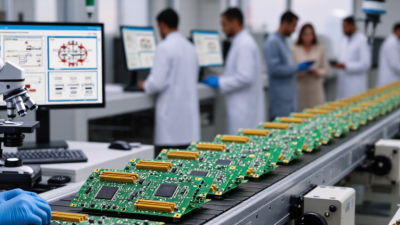
China’s printed circuit board manufacturing industry supports products ranging from compact sensors to industrial control equipment. Its factories handle many stages, including laminate preparation, copper patterning, drilling, plating, solder-mask application, and electrical testing. On a production floor, tiny drilled holes and clean copper traces can determine whether a board performs reliably. Details matter.
Manufacturers serve both prototype orders and high-volume production, though the requirements differ. A prototype may need quick engineering feedback, while a repeat production run depends on stable materials and consistent process control. Buyers often compare layer count, board thickness, copper weight, surface finish, and inspection records. These specifications help clarify what a supplier can actually deliver.
The industry’s scale can offer broad capacity, but scale alone does not guarantee quality. Communication about design changes, tolerances, and delivery schedules deserves careful attention. A small mismatch in a drawing can create avoidable rework. I would not treat a low quotation as proof of efficiency; the assumptions behind it matter. Production capability also varies between facilities, so a sample and clear documentation provide more useful evidence than a general claim.
Top China Printed Circuit Board Manufacturing Companies
Criteria for Identifying Leading PCB Manufacturers
A capable PCB manufacturer should match its equipment to your board design, not just offer a long service list. Check its experience with layer counts, copper weights, board thicknesses, and tolerances similar to yours. Ask how it controls drilling, plating, and solder-mask registration. Specific answers are more useful than broad claims. Details matter. Review sample inspection reports and confirm that measurements can be traced to the relevant production batch.
Quality systems matter, but look for evidence of daily practice. Ask how defects are recorded, how corrective actions are verified, and who reviews changes to your design files. Request a sample build before committing to larger volumes. Compare finished boards against the approved drawings, including hole sizes and surface finish. Communication is another practical test: clear responses about lead times, material availability, and engineering questions can prevent avoidable delays. No audit catches everything; a rushed review can miss small process gaps.
Tips: Send the same complete design package to each candidate. Include fabrication notes and expected quantities. Compare their questions, sample results, and delivery updates—not price alone. If an answer is vague, ask for a concrete example. I would still leave room for uncertainty; supplier performance can vary between projects, even after a promising first order.
| Evaluation Dimension | What to Assess | Relevant Standard or Reference | Evidence to Request | Leading-Manufacturer Indicator |
|---|---|---|---|---|
| Quality management | Whether the manufacturer operates a documented quality management system with controlled processes, corrective actions, and continual improvement. | ISO 9001:2015 | Current certificate, certification scope, issuing certification body, and audit or corrective-action records. | Certification is valid and covers the relevant manufacturing site and PCB activities; process controls can be demonstrated with records. |
| Automotive quality systems | For automotive programs, assess whether the supplier’s quality system meets automotive-sector requirements and customer-specific requirements. | IATF 16949:2016 | Valid certificate for the applicable site, scope, and manufacturing processes; relevant customer-specific requirement controls. | Automotive certification is applicable to the production site and scope. Certification should be verified with the issuing body or official IATF resources. |
| Rigid-board product conformance | Check whether rigid PCB materials, construction, and workmanship are specified and inspected against the agreed product class and acceptance criteria. | IPC-6012; IPC-A-600 | Customer-approved specification, inspection criteria, sample inspection reports, and certificates of conformance. | Acceptance class and revision are agreed before production, and inspection results are traceable to the relevant lot. |
| Flexible and rigid-flex capability | For flexible or rigid-flex boards, assess whether qualification, performance, materials, and inspection controls match the design and application. | IPC-6013; IPC-A-600 | Process capability documentation, material specifications, qualification records, and inspection results for comparable constructions. | Evidence relates to the required flex or rigid-flex construction, rather than only to rigid-board production. |
| Engineering and design-for-manufacturing support | Review how the supplier evaluates fabrication data, identifies manufacturability risks, and manages design changes before production. | Customer drawings, fabrication notes, and agreed acceptance requirements | Documented design review, engineering queries, stack-up confirmation, and revision-control procedures. | Potential issues are raised before release, and approved changes are controlled through an auditable revision process. |
| Inspection and test controls | Assess inspection planning, electrical testing, measurement-system controls, and handling of nonconforming product. | Applicable IPC product specifications and customer requirements | Inspection plans, electrical-test records, calibration records, nonconformance reports, and corrective-action evidence. | Test methods and acceptance criteria are defined for the product, and results are linked to production lots. |
| Material and substance compliance | Verify material declarations and controls for restricted substances relevant to the destination market and customer requirements. | EU RoHS Directive 2011/65/EU, as amended; EU REACH Regulation (EC) No 1907/2006 | Supplier declarations, material data, applicable test reports, and a process for monitoring regulatory updates. | Compliance documentation is current, product-specific where required, and supported by traceable material records. |
| Environmental management | Review whether environmental aspects, operational controls, and improvement processes are managed systematically. | ISO 14001:2015 | Current certificate, certification scope, site coverage, and environmental management records relevant to production. | Certification scope covers the manufacturing site under evaluation, with documented operational controls. |
| Traceability and change control | Determine whether materials, production records, inspection results, and engineering revisions can be traced through the manufacturing process. | Customer traceability requirements and the supplier’s documented quality system | Sample lot-trace exercise, material records, traveler or production history, and change-notification procedure. | A sample lot can be traced to relevant materials and process records, and changes are communicated and approved as agreed. |
| Delivery and capacity planning | Evaluate whether production planning, lead-time commitments, and escalation processes are transparent and supported by operational data. | Purchase-order terms and agreed service-level metrics | On-time delivery history, capacity-planning process, lead-time definitions, and disruption-response plans. | Performance is reported using clearly defined measures and reviewed against the customer’s agreed requirements. |
| Supplier verification | Confirm that certificates, facility details, and claimed capabilities belong to the actual production site being considered. | Certification-body records, customer audits, and site-specific documentation | Certificate numbers and scopes, site address, audit results, and a production-site visit or remote audit where appropriate. | Claims are independently verifiable and consistent across certificates, audit evidence, and site records. |
Note: This is a supplier-evaluation framework, not a ranking of individual manufacturers. Requirements vary by product, application, destination market, and customer specification; confirm the applicable standards and revisions during supplier qualification.
China’s PCB sector includes large-scale producers, specialist fabricators, and electronics suppliers with in-house manufacturing. Their profiles differ by board type, process control, and customer mix. Some high-volume plants make multilayer boards for consumer devices and network equipment. Others focus on rigid-flex designs, thick copper, or prototypes. Small details matter.
A useful company profile should examine more than stated capacity. Look for documented quality systems, production traceability, environmental controls, and engineering support during design reviews. On a factory floor, teams may inspect drilled panels, measure copper thickness, and compare electrical test results with specifications. These checks offer useful evidence, but public reports rarely reveal actual yields or delivery performance. That gap deserves attention.
Suppliers serving automotive, medical, or communications projects may face different qualification demands. Buyers should match a fabricator’s layer count, materials, surface finishes, and testing methods to the product. A low quote can hide setup limits or longer lead times. No profile tells the whole story. Recent audit records and sample test data can help distinguish promotional claims from repeatable manufacturing practices.
China’s printed circuit board manufacturers differ in more than factory size. Their capabilities may include single- and multilayer rigid boards, flexible circuits, and rigid-flex assemblies. Some handle high-density interconnect designs with laser-drilled microvias and fine copper traces. Others focus on stable, cost-effective boards for controls, lighting, or consumer electronics. Details matter. Ask about layer limits, minimum trace spacing, copper thickness, and available surface finishes.
Product specialties often reflect both equipment and process control. A supplier serving communications projects may support controlled impedance and test coupons. Automotive or industrial boards may require heavier copper, thermal management, and documented inspection steps. Look for clear answers about prototyping, production volumes, electrical testing, and automated optical inspection. A high layer count alone does not prove quality. The board’s materials, stack-up, and intended operating conditions must fit together; even a polished specification can leave assumptions unresolved.
Tips: Send fabrication files with a readable stack-up and stated tolerances. Request a sample report or capability sheet, then confirm details directly. Compare quotes carefully; a low price may omit testing, tooling, or finish requirements.
China’s PCB sector remains central to global electronics supply. Dense networks connect board makers with component suppliers, tooling shops, and freight services. That proximity can shorten development cycles and help factories respond when designs change. Demand is shifting toward finer lines, higher layer counts, and compact boards for connected devices, vehicles, and industrial equipment. Yet capability varies between facilities. A supplier’s stated capacity does not always reveal its yield, process stability, or ability to support a complex design over time. Buyers need to assess those details directly.
Automation and data-based inspection are becoming more important as boards grow denser and tolerances tighten. Some producers are investing in imaging, drilling, and process monitoring, while customers seek traceable quality records and shorter lead times. China’s broad manufacturing base gives it a strong position, but the industry also faces pressure to reduce energy use, manage process materials responsibly, and retain skilled technical teams. These upgrades take money and time, and progress is uneven. Global customers are also distributing orders across regions to reduce disruption risk. That changes how capacity is planned. A practical assessment should compare sample quality, delivery consistency, engineering support, and realistic production limits—not just quoted price. One difficult question remains: can a fast-growing production line maintain the same quality six months later?