The global beauty-device market is moving from professional clinics into bathrooms, travel bags, and home routines. This shift makes the Led Silicone Face Mask a practical category for international buyers, but product quality varies sharply. Flexible silicone, red and near-infrared wavelengths, treatment comfort, battery design, and documented output should guide purchasing decisions.
Industry data supports this growing interest. The Global Wellness Institute valued the global wellness economy at $6.3 trillion in 2023 and projects it could approach $9 trillion by 2028. McKinsey’s 2024 Future of Wellness research also reports strong consumer spending on appearance, skin health, and at-home solutions. These figures do not prove that every LED mask works equally well. They show why buyers need clearer technical comparisons.
This guide reviews ten leading options for global buyers. It considers wavelength ranges, irradiance disclosure, session controls, eye protection, charging standards, warranty support, and regulatory communication. FDA-cleared status, where applicable, is treated carefully; clearance does not guarantee identical performance across products. Buyers should also check local import rules and electrical requirements. Safety matters.
No ranking is perfect.
Some brands publish limited test data. Others provide impressive specifications without independent verification. That gap deserves attention. The strongest choices combine transparent documentation, usable design, realistic claims, and responsive after-sales service. Clinical evidence for LED photobiomodulation is promising, yet results depend on skin condition, dosage, consistency, and individual response. This comparison aims to support informed evaluation, not replace professional medical advice.
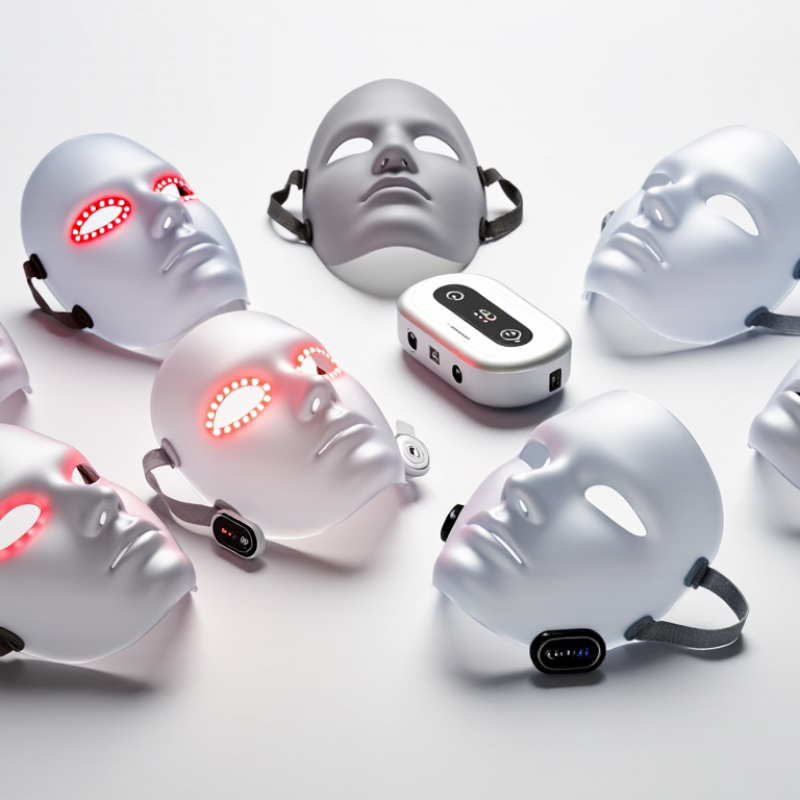
LED silicone face masks use light-emitting diodes to deliver controlled light across the face. Their soft silicone shell follows facial contours more closely than rigid plastic. Most devices use red light, near-infrared light, or both. Red light commonly targets surface skin, while near-infrared light penetrates deeper tissue.
The process is called photobiomodulation. Light energy may influence cellular activity, circulation, and inflammatory responses. However, results depend on wavelength, irradiance, treatment time, and skin condition. The science is promising, not magic. A 2024 Grand View Research report estimated the global LED light therapy market at over USD 1 billion, with continued growth expected through the decade. That figure reflects rising interest, not guaranteed facial results. Clinical evidence also remains uneven, especially for home-use masks. Some users notice calmer skin; others see little change.
Tips: Check the wavelength range and published irradiance before buying. A useful mask should explain treatment duration clearly. Follow eye-safety instructions, even when the mask feels comfortable. Avoid assuming brighter light works better. Excessive exposure can irritate sensitive skin. Buyers should also inspect battery quality, charging protection, and cleaning instructions. Silicone can collect oil around the nose and chin. Clean it after every session. Results usually require consistent use, but consistency should never replace professional care for persistent acne, pigmentation, or unexplained irritation.
Evaluating LED silicone face masks requires more than counting light diodes. Reliable models clearly state wavelength ranges, irradiance, treatment time, and operating distance. Red light commonly targets visible skin concerns, while near-infrared light reaches deeper tissue. However, published specifications should not replace professional advice. Buyers should also check independent test reports, user instructions, and relevant market approvals. A mask should rest evenly across the cheeks, nose, and jaw without sharp pressure points. Flexible silicone improves contact, but excessive softness may reduce stability during movement.
Eye protection matters. Built-in shielding, comfortable eye openings, and adjustable straps can improve safe use. Examine the controller carefully. Useful controls include session timing, intensity adjustment, battery indicators, and automatic shutoff. A rechargeable battery helps frequent travelers, although charging performance may vary between regions. Check plug compatibility and voltage requirements before importing. Cleaning also deserves attention. Non-porous silicone is easier to wipe, but seams and charging ports can collect residue.
Tips: Compare measured irradiance, not only marketing language. Test the fit for ten quiet minutes. Inspect heat, cable strain, and visibility. Keep treatment records, even simple ones. Skin responses differ, and improvement may be uneven. I would not rank comfort below technical output; an impressive mask is useless when users stop wearing it. Buyers should also review return policies, warranty coverage, and replacement-part access.
Top 10 LED Silicone Face Masks for Global Buyers should be compared by more than appearance. Light modes often include red, blue, near-infrared, or combined settings. Red light may suit users seeking a gentler skincare routine, while blue light can feel more intensive. Mode labels are not enough. Check the stated wavelengths, treatment time, and safety instructions. Real performance depends on consistent contact and correct use.
Fit varies sharply across the ten models. A flexible silicone shell should rest evenly over the cheeks, nose, and jaw without pressing the eyelids. Adjustable straps help, but heavy battery packs can pull the mask backward. Comfort matters during ten-minute sessions. Look for soft edges, clear eye protection, and ventilation near the nose. Some masks feel light at first, then become warm. That detail is easy to miss.
Tips: Compare battery life at the selected mode, not standby time. A unit lasting several sessions is more practical for travel. Confirm charging voltage, plug compatibility, warranty terms, and regional compliance before ordering. Do not trust vague “professional strength” wording without test data. Keep a simple usage record for two weeks. Results can be subtle, and personal expectations may be too high. I would also question masks offering many colors but little technical detail. More modes do not always mean better value.
| Rank | Mask Type | Light Modes | Typical Wavelengths | Published Treatment Time | Fit & Adjustment | Comfort Factors | Approx. Weight | Battery / Charging | Best For | Overall Assessment |
|---|---|---|---|---|---|---|---|---|---|---|
| 1 | Silicone Mask A | RedNear-infraredCombined | Red 630–633 nm; NIR 830 nm | 10 minutes per session | Adjustable head straps; nose and eye openings; suitable for most adult face shapes | Flexible silicone, soft eye guards, low facial pressure | Approx. 320 g including controller | Rechargeable battery; USB charging; approximately 6–8 sessions per charge | General skin-care routines and first-time users | ★★★★★ |
| 2 | Silicone Mask B | RedBlueNIRMixed | Red 633 nm; blue 415 nm; NIR 830 nm | 10–15 minutes per session | Three-point adjustable strap system; flexible side wings improve cheek coverage | Lightweight silicone; detachable controller; moderate strap tension | Approx. 280 g including controller | Rechargeable handheld controller; USB-C charging; approximately 5–7 sessions per charge | Buyers seeking multiple light options | ★★★★★ |
| 3 | Silicone Mask C | RedNIR | Red 633 nm; NIR 830 nm | 10 minutes per session | Adjustable top and rear straps; close-fitting design with broad forehead coverage | Thick medical-grade silicone; cushioned eye area; slightly warmer during use | Approx. 350 g including controller | Rechargeable battery pack; USB charging; approximately 4–6 sessions per charge | Users prioritizing coverage and secure positioning | ★★★★☆ |
| 4 | Silicone Mask D | RedBlueCombined | Red 630 nm; blue 415 nm | 10–12 minutes per session | Single rear strap; broad eye and mouth openings; moderate adjustment range | Very flexible silicone; easy to fold; less rigid support around the nose | Approx. 240 g including controller | Rechargeable controller; USB-C charging; approximately 7–10 sessions per charge | Travel and portable skin-care use | ★★★★☆ |
| 5 | Silicone Mask E | RedNIRPulse | Red 633 nm; NIR 830 nm | 10 minutes per session | Two adjustable straps; contoured fit for the forehead, cheeks, and jawline | Soft silicone; balanced weight; comfortable for seated use | Approx. 300 g including controller | Rechargeable battery; USB charging; approximately 6–8 sessions per charge | Regular users wanting a stable fit | ★★★★☆ |
| 6 | Silicone Mask F | RedBlueNIR | Red 630–633 nm; blue 415 nm; NIR 830 nm | 10–15 minutes per session | Adjustable elastic straps; medium facial coverage; may require repositioning on narrow faces | Thin silicone construction; low heat; moderate eye-area comfort | Approx. 260 g including controller | Rechargeable battery; USB charging; approximately 5–8 sessions per charge | Global buyers comparing color and wavelength modes | ★★★★☆ |
| 7 | Silicone Mask G | RedNIRCombined | Red 633 nm; NIR 830 nm | 10 minutes per session | Headband-style fastening; good jaw coverage; less suitable for very small faces | Soft, washable silicone; slightly heavier around the lower face | Approx. 330 g including controller | Rechargeable battery pack; USB-C charging; approximately 4–6 sessions per charge | Users preferring full-face coverage | ★★★★☆ |
| 8 | Silicone Mask H | RedBlue | Red 630 nm; blue 415 nm | 10 minutes per session | Single adjustable strap; open lower-face design; easy to put on and remove | Lightweight silicone; minimal pressure; limited chin coverage | Approx. 220 g including controller | Rechargeable controller; USB charging; approximately 8–10 sessions per charge | Short routines and lightweight comfort | ★★★☆☆ |
| 9 | Silicone Mask I | RedNIR | Red 633 nm; NIR 830 nm | 10–15 minutes per session | Adjustable straps with wider fit range; light leakage may occur near the temples | Flexible silicone; comfortable nose bridge; moderate warmth during longer sessions | Approx. 290 g including controller | Rechargeable battery; USB charging; approximately 5–7 sessions per charge | Value-focused buyers and routine use | ★★★☆☆ |
| 10 | Silicone Mask J | RedBlueNIRMixed | Red 630–633 nm; blue 415 nm; NIR 830 nm | 10–20 minutes per session | Adjustable top and rear straps; broad fit range; heavier controller cable | Soft silicone; good flexibility; comfort depends on strap adjustment | Approx. 310 g including controller | Rechargeable battery; USB charging; approximately 4–7 sessions per charge | Buyers wanting the widest selection of light modes | ★★★☆☆ |
Top 10 LED Silicone Face Masks for Global Buyers
The strongest candidates should pass more than a brightness test. Check IEC 62471 photobiological safety documentation and applicable electrical safety testing. These standards examine optical exposure and device construction. A 2023 report from the International Energy Agency shows LEDs can reduce lighting energy demand substantially, but efficiency does not prove skincare safety. Different questions matter here.
Red and near-infrared wavelengths are commonly used for cosmetic photobiomodulation. Blue light may support acne-prone routines, but it can irritate sensitive skin. The American Academy of Dermatology advises users to follow treatment instructions and consider eye protection. Buyers should inspect wavelength ranges, irradiance, timer controls, and heat levels. A laboratory certificate is useful. It is not a medical guarantee.
Skin compatibility requires practical testing. Cleanse the face, patch-test near the jaw, and stop if burning, swelling, or persistent redness appears. Use the mask on dry skin, without photosensitizing products unless a clinician approves them. Many instructions suggest several sessions weekly, yet more exposure is not automatically better. The 2024 Global Wellness Institute Monitor valued the wellness economy at 6.3 trillion dollars, reflecting strong consumer demand, not proof of every device claim. I would also question vague “clinically proven” language. Who tested it, on how many skin types, and for how long? Progress can be slower than expected.
Choosing the right LED silicone mask requires more than comparing light colors. Global buyers should check wavelength accuracy, irradiance, treatment time, and skin contact. In product evaluations, flexible silicone usually fits better than rigid plastic. However, comfort depends on facial shape, strap pressure, and mask weight. A mask that feels heavy after five minutes may become frustrating during regular use. Look for clear technical data, independent safety testing, and instructions written in understandable language. Avoid products making guaranteed treatment claims.
Tips: Ask suppliers for wavelength tolerances, power specifications, battery details, and cleaning guidance. Confirm whether the charger supports your destination market. Check plug type, voltage range, warranty terms, and spare-part availability. A timer and automatic shut-off can improve daily safety. Also inspect the eye shields carefully. Poorly positioned shields may allow uncomfortable light exposure. Small details matter.
Buyers should compare the top ten options using the same checklist. Review silicone quality, ventilation, controller design, charging time, and return conditions. Medical or cosmetic compliance requirements differ across countries, so verify local rules before importing. User reviews can reveal recurring problems, but they are not laboratory evidence. I would also request a sample before placing a large order. Product photos can hide uneven seams and weak straps. Even reliable specifications need practical testing, because real-world fit is sometimes disappointing.