Skip to content

Why Choose a Wrist Watch for Your Business?

A Wrist Watch can do more for a business than show the time. It can mark an employee milestone, thank a long-term client, or make a brand visible during a meeting. Unlike a digital message, a watch sits on a desk, catches the light, and may become part of someone’s daily routine. That is its appeal. It is also a meaningful purchase, so the design and quality need to feel considered.

Industry figures show why this category deserves careful attention. The Federation of the Swiss Watch Industry reported exports worth CHF 26.7 billion in 2023 and CHF 26.0 billion in 2024. Bain & Company and Altagamma estimated global personal luxury goods spending at about €364 billion in 2024, down roughly 2% year over year. These figures describe different markets; neither proves that a branded watch will generate a return for a particular business. They do show a substantial, competitive category where customers notice quality and value.

A business choosing watches should weigh craftsmanship, comfort, service, and how naturally its branding fits the dial or case. A heavy watch may look impressive in a product photograph, yet sit unworn in a drawer. That matters. Consider the recipient, the occasion, and the budget before placing an order. A watch is not automatically the right gift, and a logo cannot rescue a poor fit. The sections ahead explore how to assess its business value, choose a suitable style, and avoid details that can make a thoughtful gesture feel generic.
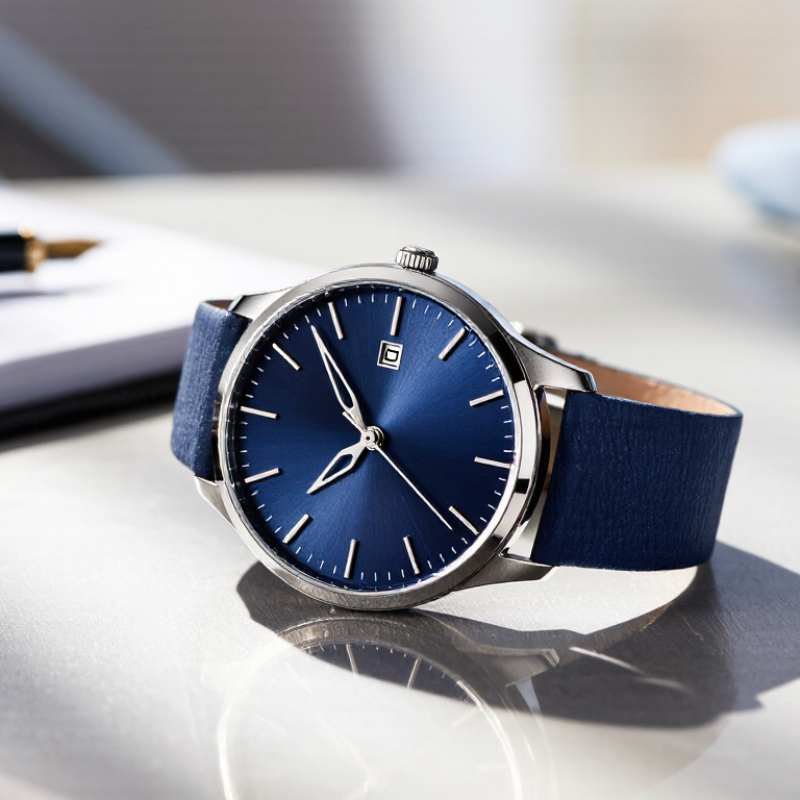
Why Choose a Wrist Watch for Your Business?

What a Business Wristwatch Is and How It Is Used

A business wristwatch is a practical timepiece chosen for work, rather than a device worn only for decoration. It may have a clear face, a comfortable strap, and a design that suits meetings, travel, or hands-on tasks. Its main job is simple: show the time at a glance. No need to unlock a phone. That can help during a presentation or a quick conversation with a client. A watch is not a substitute for good planning, though. I still catch myself checking it too often when a meeting runs late.

Tips: Choose a dial you can read quickly in ordinary office lighting. Make sure the strap feels comfortable after several hours. If your work involves frequent handwashing or outdoor tasks, check the watch’s care instructions before wearing it.

In business, a wristwatch can support punctual habits and give a consistent finishing touch to work clothes. For example, a project manager might check the time between site visits, while a consultant may use it to keep a discussion on schedule. A quiet, simple watch is often more useful than a feature-heavy one. Still, personal preference matters; a watch that pinches or distracts will probably stay in a drawer.

Key Benefits of Wristwatches in Business Settings

A wristwatch offers a quick way to check the time without reaching for a phone. During a client meeting, that small difference can help keep attention on the conversation. A glance at the wrist is usually quieter and less distracting than unlocking a screen. Small detail. It matters in busy rooms.

Watches also support punctual routines. A sales professional moving between appointments can check the time while walking, even when a phone is tucked away. In workshops or reception areas, a clear dial can be easier to read than a screen in bright light. A comfortable strap matters during long shifts, too. If it pinches or catches on a sleeve, the watch may become one more annoyance.

A wristwatch can also contribute to a polished, consistent appearance, especially where staff meet clients face to face. It does not replace good service, careful scheduling, or reliable digital tools. Some employees may find a watch uncomfortable, and phones remain more useful for alerts and shared calendars. It can help. Choose a design that suits the work, fits well, and is easy to read at a glance.

How to Choose a Wristwatch for Business Needs

Choosing a wristwatch for business starts with the workday, not the display case. A desk-based consultant may value a slim case that slips beneath a shirt cuff, while a field supervisor may need a durable case and clear numerals. Consider where you will wear it: client meetings, travel, workshops, or all three. Small details matter. A reflective dial can be difficult to read under bright office lights.

Match features to your actual routine. If you cross time zones often, a second time-zone display may reduce phone checks; otherwise, it could add clutter. A date window helps some people, but tiny numerals can frustrate tired eyes. Choose a strap that stays comfortable through a full day, and check whether it can be adjusted easily. Try it with your usual work clothes. Comfort counts. The watch should feel present, not distracting.

Set a budget that includes upkeep, not just the purchase price. Battery-powered watches need periodic battery changes, while mechanical models generally require servicing. Check water-resistance details and care instructions, especially if your job involves handwashing or outdoor work. Verify specifications in the product documentation rather than relying on assumptions. I might be giving comfort more weight than appearance, but a polished first impression cannot make an awkward watch pleasant to wear.

Materials, Features, and Styles for Workplace Use

A workplace watch should be easy to read, comfortable through a long shift, and suited to its surroundings. A brushed stainless-steel case resists everyday scuffs; lightweight resin may feel better during repetitive tasks. Leather looks polished in meetings, but can feel warm after hours of wear. Silicone or woven straps are easier to rinse, though they may look too casual in some offices. Small details matter: a clear dial, quiet movement, and secure clasp can prevent daily annoyances. Not a tool for every job.

Features should match the work. A simple analog face is quick to scan; a digital display can make timers and multiple time zones easier to use. Water resistance helps with handwashing and rain, but it does not mean a watch is suitable for every wet-work environment. The U.S. Bureau of Labor Statistics recorded 2.6 million nonfatal workplace injury and illness cases in private industry in 2023. A watch is not protective equipment, and it should never interfere with required gear or safe procedures.

Style still matters. Deloitte’s 2024 Swiss Watch Industry Study surveyed more than 6,000 consumers across six markets, a reminder that preferences vary widely. For business wear, a slim case and restrained colors sit neatly under a cuff; field work may call for a larger display and a tougher strap. Test the clasp and legibility in your actual lighting. I would not choose by appearance alone. A watch that looks right online can feel awkward by midafternoon.

Why Choose a Wrist Watch for Your Business?

Crystal material can help match a watch to workplace demands. Sapphire is highly scratch-resistant, mineral glass offers a practical middle ground, and acrylic is lightweight and easy to replace. Mohs values are approximate; scratch resistance does not measure impact resistance.

Branding and Purchasing Options for Business Watches

A business wristwatch can serve as a practical gift, staff milestone award, or event keepsake. Branding options range from a discreet case-back engraving to a small dial mark, custom strap color, or presentation box. Keep the logo legible, not dominant.

ASI’s 2023 Ad Impressions Study reported that 85% of consumers remembered an advertiser from a promotional product. That finding covers promotional products broadly, not watches specifically, so treat it as context rather than a watch-performance guarantee. Useful distinction.

Purchasing choices affect both wearability and cost. Compare quartz and automatic movements, case materials, strap options, minimum order quantities, and repair support. Request a physical sample: a logo that looks subtle on screen may crowd a small dial.

There is a catch. More customization can raise unit costs and lengthen delivery times, while a highly distinctive design may not suit every employee. A tiered order can help: a simple model for wider distribution, with a more customized version for long-service awards.

Ask suppliers to confirm engraving dimensions, packaging, delivery dates, and warranty terms in writing. Then test the watch during a normal workday. Comfort matters; a heavy case can stay in its box.