
Buying printed circuit boards in 2026 involves more than comparing prices. A board that looks inexpensive can become costly if its materials, tolerances, or delivery schedule do not fit the project. Start with the design files, expected production quantity, operating environment, and target assembly date. Small details matter. Specify the layer count, board thickness, copper weight, surface finish, and any controlled-impedance requirements before requesting quotes.
Reliable purchasing depends on clear communication and verifiable supplier information. Ask manufacturers to review the design for manufacturability and identify constraints before production. Compare their quoted specifications, tooling costs, minimum order quantities, lead times, and inspection options—not just the unit price. For prototypes, confirm whether the same materials and process can support later production. Request relevant quality documentation, and clarify how defects or specification changes are handled. These steps help buyers make informed decisions without assuming that every supplier offers identical capabilities.
A sample build can reveal issues that a quote cannot. Check dimensions, hole locations, solder-mask alignment, and board finish against the approved files. If the design requires electrical testing or traceable materials, state that requirement explicitly. Even a careful checklist can miss something; I would revisit the assumptions before approving a large order. That extra review may feel slow. It can prevent delays, rework, and avoidable surprises when the boards reach assembly.

Before requesting quotes, turn your design into measurable requirements. State the board outline, layer count, finished thickness, copper weight, and minimum trace and space. Add controlled-impedance targets with tolerances, operating temperature, and expected production volume. A 1.6 mm board may suit one assembly, while a tight enclosure may require a thinner stack-up. Attach fabrication drawings and approved design files, then confirm both describe the same revision. Small mismatches can cause costly delays.
Tips: Ask for stack-up details, test coverage, and inspection records. Specify whether boards need electrical testing, surface-finish checks, or cross-section analysis. Name the applicable quality class and environmental requirements, but verify they fit the product and destination market. Request current compliance documents for relevant substances and materials. Keep the evidence with your purchasing records.
Performance targets should reflect actual use, not hopeful assumptions. Consider signal speed, current load, heat, vibration, and expected service life. For example, a power trace carrying sustained current needs different review from a low-speed control line. Consult your layout engineer when tolerances or thermal limits are uncertain. I have seen teams overlook connector clearances because the drawing looked complete; it was not. Before approval, review one representative board against the assembly, enclosure, and test plan.
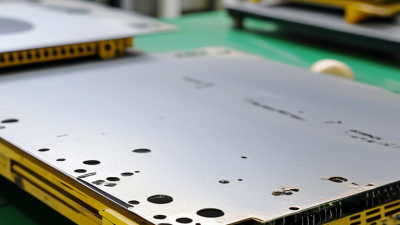
Start with the signals, environment, and mechanical limits—not a preferred layer count. Standard FR-4 suits many moderate-speed designs; high-speed links may need laminate with controlled dielectric loss. Compare dielectric constant and dissipation factor at relevant frequencies, not just material names. For outdoor equipment, check moisture resistance and operating temperature.
Small details matter. A six-layer stack-up can improve routing and return paths, but it may add cost without solving a poorly placed connector or split ground plane.
Prismark’s 2024 PCB industry forecast reported global PCB production value of $68.1 billion in 2023, down 15% year over year. That volatility makes complete specifications valuable: vague requests invite mismatched quotes.
State finished board thickness, copper weight, minimum trace and spacing, drill sizes, surface finish, impedance targets, and acceptable tolerances. For controlled impedance, provide the fabricator with the stack-up and target values; confirm its proposed material and geometry before release.
IPC-2221 offers design guidance, while IPC-6012 covers rigid-board qualification and performance. Ask which revision and acceptance class the supplier will quote against.
Even experienced teams can overlook this. I would still review the first panel’s cross-section and impedance results before approving repeat production.
Compare suppliers against the board you actually need, not a generic capability sheet. Prismark’s 2024 PCB industry report estimated global production value at about $68.9 billion in 2023 and projected it could reach $90.8 billion by 2028. That growth makes supplier choice more important, not simpler. Request documented limits for layer count, finished copper weight, minimum trace and space, drilled-hole diameter, and impedance tolerance. A supplier’s “advanced” label means little without numbers tied to your design.
Check certifications against the product and market. IPC-6012 and IPC-A-600 define performance and acceptability requirements for rigid boards; ISO 9001 addresses quality management. Automotive projects may require IATF 16949. Ask for current certificates, scope, and audit dates. Then compare actual controls: material traceability, solder-mask registration, electrical testing, and how nonconforming panels are handled. Certificates help. They do not guarantee every order.
Ask for a stack-up review before releasing production files. Confirm panel size, laminate availability, via structures, lead time, and whether impedance coupons are tested and recorded. Request a sample report with measured results, not only a capability promise. Prismark’s market figures describe the whole industry, not the quality of an individual factory. That distinction matters. A supplier may meet the drawing and still miss your schedule; build in time for one engineering revision.
When requesting quotes for printed circuit boards, send the same complete information to each supplier. Include the latest fabrication files, board dimensions, layer count, material, copper weight, surface finish, and order quantity. Add the expected production date and shipping destination. Small details matter. A missing stack-up or unclear file revision can make two prices look comparable when they are not.
Ask each supplier to identify assumptions before comparing totals. Request separate costs for tooling, testing, packaging, and shipping, plus any minimum order charges. Confirm the quoted lead time, payment schedule, accepted tolerances, and how design changes affect cost or delivery. Ask whether the board will receive electrical testing, and what documentation comes with the order. Review design-for-manufacturing feedback carefully; a suggested change may improve yield, but it still needs to fit the circuit’s requirements. Keep revisions organized. It is easy to approve an old file by mistake.
A low quote can reflect different materials, inspection steps, or production terms, not just better efficiency. Compare the details in writing, and clarify anything that sounds vague. I would not treat a tidy spreadsheet as proof that every risk is covered. Some uncertainty remains until the design is reviewed against the manufacturer’s process.
Illustrative sample pricing for the same 2-layer, 50 × 50 mm FR-4 board (1.6 mm thickness, 1 oz copper, HASL finish, electrical testing). Example prices are not market quotes and exclude shipping and taxes.
Larger orders can reduce the price per board, but compare quotes only when specifications match. Before ordering, review the design files, included tooling or setup fees, lead time, payment terms, shipping, and how revisions or defects are handled.
Buying printed circuit boards in 2026 starts with a controlled sample, not a rushed purchase order. Share the Gerber files, stack-up, copper weight, surface finish, and tolerances. Request a first-article set made with the intended production process. Inspect hole plating, solder-mask registration, board thickness, and edges under good lighting. Keep one approved board as a physical reference. Small details matter.
Prismark’s 2024 global PCB market outlook projected production value to approach US$90.8 billion by 2028. That growth makes clear specifications and capacity checks important when placing orders. Put the revision, quantity, panelization, packaging, and delivery dates on the purchase order. Ask the supplier to confirm material availability and report any proposed substitutions before production. A price alone tells little.
Before release, agree on the applicable IPC-6012 acceptance class and inspection evidence. Request electrical continuity and isolation test results, plus a lot-level inspection report. For delivery, set shipment milestones and require protective packaging suited to the board’s finish and transit conditions. Check the carton labels against the order when it arrives. A checklist can still miss a detail, so record issues with photos and update the next order’s requirements.
Use this workflow to organize a PCB purchase. Lead times and inspection requirements are planning references; confirm them against the board design, order quantity, applicable standards, and supplier capability.
| Stage | Information to Prepare or Confirm | Practical Control | Acceptance Check | Record to Keep |
|---|---|---|---|---|
| 1. Define the board requirements | Board outline, layer count, finished thickness, copper weight, minimum trace and spacing, surface finish, solder mask, legend, and operating environment. | Provide the latest Gerber or ODB++ files, drill files, fabrication drawing, stack-up requirements, and a revision identifier. State any required compliance or workmanship standard. | Check that the fabrication data matches the drawing and that critical dimensions and tolerances are explicitly stated. | Approved design package, revision history, and written specification. |
| 2. Request and compare quotations | Quote quantity, prototype and production quantities, panelization needs, shipping destination, and requested delivery date. | Ask for a line-item quote covering fabrication, tooling or setup, electrical testing, finishing, shipping, and any expedited service. Confirm quote validity and lead-time assumptions. | Compare offers on the same board revision, specification, quantity, test scope, and delivery terms—not price alone. | Comparable quotation summary and agreed order specification. |
| 3. Review design for manufacturability | Fabrication notes, stack-up, annular rings, drill sizes, copper clearances, solder-mask openings, and any controlled-impedance requirements. | Resolve supplier questions before production. For controlled impedance, provide target impedance, tolerance, reference layers, and relevant trace geometry. | Approve any proposed changes in writing; do not rely on an undocumented substitution or interpretation. | Design review comments, agreed stack-up, and approved deviations. |
| 4. Order and approve samples | Confirm sample quantity, sample price, build specification, test coverage, and whether samples will use the intended production process. | For an initial evaluation, a small set such as 5–10 boards may be useful, depending on design complexity and test needs. Agree the sample quantity and schedule before ordering. | Inspect sample dimensions and workmanship; verify critical features and electrical continuity against the approved files. Test-fit and assemble boards where applicable. | Sample inspection results, photographs, test records, and written approval or corrective-action request. |
| 5. Place the production order | Final quantity, revision, approved sample status, price, delivery address, requested ship date, and packaging requirements. | Use a purchase order or equivalent written confirmation that references the exact file revision and agreed specification. Require written approval for changes. | Check the order acknowledgment for quantity, specification, price, schedule, and any agreed inspection or certification documents. | Purchase order, order acknowledgment, and final approved data package. |
| 6. Monitor production quality | Inspection scope appropriate to the board class, product risk, and applicable customer requirements. | Agree which checks apply, such as visual inspection, dimensional checks, solder-mask and finish review, and electrical continuity or isolation testing. | Use the specified acceptance criteria and applicable revision of standards, such as IPC-A-600 or IPC-6012 when required by the order. Request a certificate or test summary if agreed. | Inspection report, electrical-test evidence, material or compliance documentation when specified, and nonconformance records. |
| 7. Confirm shipment and delivery | Quantity shipped, packaging method, delivery address, carrier service, tracking information, and required shipping documents. | Request protective packaging that limits moisture, contamination, and physical damage. Confirm whether split shipments are permitted before dispatch. | On receipt, check package condition, board quantity, labels, revision, and visible damage before accepting the shipment. | Packing list, tracking details, receiving inspection, and delivery discrepancy report if needed. |
| 8. Close out and manage repeat orders | Assembly results, field or test feedback, yield issues, and any engineering changes. | Keep the approved sample and order records linked to the board revision. Reconfirm price, lead time, materials, and process changes for repeat orders. | Release a new revision only after its files and changes have been reviewed and approved; avoid mixing revisions in one shipment unless clearly identified. | Supplier performance notes, approved revision log, and repeat-order specification. |